Guggenheim Venice

Sunday, January 9, 2011

Come Hell or...

Indeed.

My first impression of Venice was somewhat skewed due to my arrival in a period of high water, or acqua alta. This doesn't happen nearly as often as I'd like, but I was lucky enough to have it happen my first two days in town. Venice was my puddle. I arrived on the vaporetto (water bus) thinking that this was the normal state of affairs. It being a misty mysterious sort of day, the oft-described weirdness of the place was compounded ten-fold. How exactly does this place run? Surely, surely this can't happen always?

The water had subsided by the time I headed out for training on Day 1. Halfway through, however, Alessandro's phone rang. I understood some numbers. 142. Greek. The voice was telling him that tomorrow, my first day of work, was going to be the highest high water that he could remember (and he remembers a lot). I followed him around as he busied everyone putting books on top of tables and bricks under photocopiers. I have no head for numbers and definitely no head for Venice so I had to wait until the next day to see what it was all about. I woke up and looked out my window onto my reasonably elevated street.

This is what I saw from my third-story window:


No problem. I have boots. Ale had warned me to take the vaporetto as I wouldn't be able to make it through San Marco in all this ocean. In retrospect I'm sure I could have managed but it was early days yet and this was all a bit too much stimulation for one morning. Also, we must remember that my bags hadn't yet arrived so I was best keeping the one set of clothes I did have dry. Good thinking. Down into my hallway, then, and this is what I see:


Out the door, onto the vaporetto. This is the commute by sea:


Salute is my stop when I take the bus (thats the cathedral there), and I join the ranks of the tip-toers tip toe-ing (as this motion can only be described - moving very slowly) through the alleys.


This is wonderful, I think. What a wonderful place this is, what a backwards town. Gleefully I take my seat in the student room and start to feel very, very guilty as the interns file in one by one and I see that I am vastly better equipped than they for these centuries old aquatic shananigans. I have always said that there is absolutely nothing in this world worse than wet jeans.

Alas, it could not last. There have only been about 5 days of flood in my nearly 6 weeks here (gosh, really? Already?). I have exceptionally tall gumboots so all it means for me is that I must leave for work an extra 30 minutes early and there are less dogs about to play with on my commute. It's a give and take.

The Peggy Talk


Oh, the Peggy Talk. My old friend.


It seems like an age ago that I was sitting in the Elephant House in Edinburgh reading Peggy Guggenheim's autobiography and being shocked and appalled. Now I think I have to look for a term a bit milder than appalled. Maybe dismayed? Anyway, it's all been put into a bit of context. A lot of stories have been told about Peggy that make it clear that she was not so wrapped up in herself as she would have us think.


Peggy Talks are given twice a day by two different interns at noon and 4 o'clock. As their title implies, they are short talks (about 20 minutes) about Peggy, her life, her collection, and her palazzo. They are the most popular talks, I think, and can also be the most fun. If you had told me this two months ago, though...


This is more or less verbatim how mine go. For proper information, though, I will reccommend her autobiography, Out of This Century, and Peggy Guggenheim: Life of an Art Addict by Anton Gill. Here you go (Ehem):


Peggy Guggenheim was the second daughter of Benjamin, who was the sixth son of Meyer, who was the son of Simon (all Guggenheim). Simon emigrated to the US in the 1840s and started a business importing coffee essence and stove polish. Not the most lucrative of enterprises, and luckily (for them) Meyer took over and started buying mines. Bought one in Colorado (Leadville, go figure), then Alaska, then Chile. By the beginning of the First World War the Guggenheim family owned between 75 - 80% of the entire world's silver, copper and lead. Soooo, that's what we're dealing with here.

Peggy's father, Benjamin, left the family business in 1901, resolving to spend his money a lot more efficiently (read: faster) than the other six brothers. He went down on the Titanic in 1912 after giving his seat on a lifeboat to his secretary (remember that scene in the movie? That was him!). Very noble, but it meant that Peggy, her two sisters, and her mother (Florette Seligmann) were sundered from the rapidly massing mass of wealth of the Guggenheim family. The Seligmanns were also a very old, very wealthy family, but as the Guggenheim family's wealth and fame took over New York, Peggy began to feel herself a bit of a 'poor cousin' and wanted out.


In 1919 Peggy becomes financially independent and heads overseas. On her father's death, the Guggenheim uncles had put together some change ($450,000-ish) in trust funds which she could access sporadically throughout her life. Thus, her money was never unlimited. She heads to Paris, hangs out, is groovy, and meets and marries Laurence Vail, the King of Bohemia. It is through Laurence that Peggy meets probably the most influential person of her life, Marcel Duchamp. He is an advisor to her later in her career, and their friendship outlasts her marriage to Vail, which ends in 1929.

After spending some time in London, and on the advice of her friend Samuel Beckett, Peggy opens an art gallery: Guggenheim Jeune. Like many collectors of her time, Peggy chose to collect modern art, contemporary art for her, because it was 'a living thing' in Beckett's words. Her first show threw her into the headlines, a show of the artist Jean Cocteau's stage pieces for The Knights of the Round Table. A tapestry depicting pubic hair was held up in customs and only released with a solemn promise that it not be shown to the public. Fine then, she says. I will hang it in my office and show it to everyone anyway, and then I will buy it. This starts a bit of a trend. Peggy's next show is Vassily Kandinsky's first show in Britain. It's a retrospective, and so it should be: he is at this point 70 years old. It is a critical success but nothing sells. So poor Vass doesn't feel so bad, Peggy buys Dominant Curve anonymously. And so, at around 40 years old, Peggy Guggenheim begins her art collection trying to make people feel better. Awww.

About a year later all this being nice is taking it's toll and Guggenheim Jeune closes. Peggy decides she's finished with the galeries and wants to open an art museum instead. It's an ambitious plan: contemporary artists would give talks to the public, there would be places to study and learn. She recruits Herbert Read, then editor of the Burlington magazine, to be her director. A list is made of works that she MUST have, checked once, checked twice, and she starts raising funds. Unfortunately, just as everything is ready to go, WWII breaks out. All of a sudden people have a lot more important things to worry about. Peggy has the money, but no museum. So she goes to Paris with the list and buys the works for herself.

It is during this time that most of the works in the Peggy Guggenheim Collection were acquired. Peggy resolved to buy 'a picture a day.' She shocked Lèger by buying a work the day Hitler invaded Norway. As Paris was being shelled, she was negotiating a price with Brancusi for his beloved Bird In Space. A bit crass, perhaps, but also astute. And also practical: artists needed the money to get out of Europe. By the time 1940/41 rolls around, the situation is too dangerous to ignore any longer and Peggy, being Jewish, has to also find a way out. She asks the Louvre to store her collection but is denied on the grounds that the paintings are too recent. Fair enough, 'spose. Instead, she rolls the paintings up and sticks them in a barn in Vichy, France, and makes her way back to New York.

In 1942 she marries Max Ernst, who she helped flee Europe, in New York. She has her collection shipped from Europe in crates marked 'household items' and sets up a museum gallery called Art of this Century. It quickly becomes a centre for New York's avant-garde and a place where American artists can not only be exposed to European avant-garde artists, but meet them also. Peggy holds a Spring Salon for young artists with a panel including Piet Mondrian. Jackson Pollock, who was at the time working at the Solomon R. Guggenheim Museum of Non-Objective Art as a carpenter, enters work. Mondrian encourages Peggy to take him on, and he becomes the first artist in New York to be paid a stipend. She pays him $150 a month allowing him to leave his job and paint. And paint he does. In the years between the 1942 Salon and 1947 when Peggy returns to Europe, Pollock develops the drip style for which he becomes famous. Upon leaving Europe, Peggy arranges for the stipend to be sustained by Betty Parsons, assuring that Pollock always have a shoulder to rest his whiskey on.

Meanwhile, in 1946, Peggy published her memoirs. Out of This Century (catch that?). The rest of the Guggenheim uncles were as shocked as I was at the book and tried to buy the whole print run.


In 1948, back in Europe post-war, Peggy comes to Venice and starts to look for a home. She is invited to show her collection in the Greek Pavilion of the Venice Bienalle (Greece was in civil war at the time). This was the first time that many of the artists represented in the collection (Pollock, Rothko...) were shown in Europe.
In 1949 Peggy buys the unfinished Palazzo Vernier dei Leoni on the Grand Canal where she will live out the rest of her life. She hangs her collection and opens her home to the public starting in 1951 for free viewings of the paintings and sculpture garden. She sunbathes on the roof terrace, she sponsors artists, she raises her dogs. In 1962 she is made an honorary citizen of Venice.

And in 1979, she dies.

But wait! There's more! In 1969, however, she had been invited finally to show her collection alongside that of her uncle Solomon's in his museum in New York. It was on this occasion that she agreed to will her collection to her uncle's foundatoin on her death. With a number of conditions, of course: that it never be separated, that it never leave Venice, and that it be opened to the public at least in summer. Peggy died on December 23rd, 1979 and in April 1980 her home was opened as a museum more or less as we have it today. The Peggy Guggenheim Collection.


Whew. There it is.


Tuesday, January 4, 2011

My Walk to Work


I live in Castello, which is about as far away from everything as you can get in Venice without being on another island. It's nice. Any by nice, I mean there are a lot of dogs and a fish market where a kilogram of mussels costs about $8.

I chose to live so far out because I like to walk and I wanted a decent walk to work. Remind me of this fact when I'm running late one morning. I'll kill you.

These are from one of my first walks to work. I won't call them highlights because it was too early in the piece to know what my favourite bits of the walk were. Highlights will come at the end of my stay.


If I'm on time I get to San Marco before there are too many tourists. This is crucial, as in the busiest times tourists mean it can take me an extra 10 minutes to negotiate my path.


The Academia Bridge means I have five minutes left. Nearly there.


Made it. I can do it in 25 minutes if I need to, but I usually give myself 40 so I can stroll. The details are enthralling, I know. I also eat cereal and strawberry yogurt for breakfast, if you're interested. My tea? Earl Grey.


Monday, January 3, 2011

The Museum


I know I could probably be a bit more creative with the title, but I intend to write about the museum and I don't want to be a tease.

A month on, I have done a lot, learnt a lot, and not blogged a whole lot. What can I say that you wouldn't assume? The museum is wonderful, the collection is wonderful. It is just a shame that we have so little time to wonder.

Having arrived sans baggage, I luckily didn't have to lose time changing outfits before heading to the museum for training. Alessandro, one of the capi, met me in the ticket office and led me rather unceremoniously straight into one of the galleries and down into the basement. I will pause here, because it was all a bit of a shock. I will explain why:

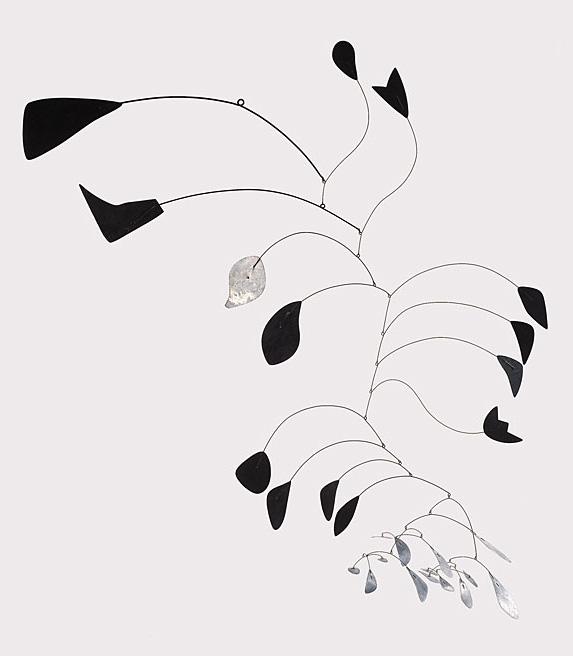
Entering the palazzo, we breezed past this:


Alexander Calder. Mobile. 1941. This is the stuff of essay footnotes, not what I expect to greet me every morning at my work place. Meanwhile, Alessandro is empathizing about my missing luggage. What missing luggage? What cancelled flights? Is that Picasso's The Poet?

It is one thing to do your research about the Peggy Guggenheim Collection online so that you don't embarrass yourself upon arrival. It is quite another to realize, upon arrival, that all those online images correspond to the actual works that are actually in the building where you will be working. And it is a sad day when you realize that you have been in that museum every day for a month and haven't seen everything. Rather, haven't looked at everything. Properly.


New Years Resolution? Think more.


Friday, December 10, 2010

Did you ever see that movie Dogma?

If you did, you'll remember that if Matt Damon and Ben Affleck's Loki and Bartleby manage to pass through the gates of that church and have their sins forgiven it will undermine the word of God and thus end all existance.

Fast forward from 1999's Dogma to 2003's the author (I mean actually the author, me) deciding where to go on her high school exchange. I thought Italy. I'd really like to go to Italy. But because my sister had such a good time with her family in Spain I decided to go to them. The rest is a very good story for another time, but the relevent bit for this story is that I figured I'd visit Italy while I in Europe anyway.

Well, I didn't.

And not only did I not go, but everyone else on the planet seemed to go to Italy over the next five years, whether they wanted to or not. I never seemed to make it, something would come up: someone's birthday, a visit to a friend. Anyway, I began to think that should I ever had made it through the arches of that Italian immigration office, wherever it was, I would open a black hole that would end all existance. And guess what? I did.

It seems like such a long time ago (a week) and I really want to forget it ever happened. The short of it was that I had a really, really hard time getting to Venice. Here's the long:

As you probably know, I had been living in Edinburgh. I was leaving on the Monday, and it started to snow on the previous Friday. No big surprise there. It's winter. Comes every year. You can set your really slow watch to it. Got to the airport and it's closed. Meaning no flights leaving (see previous post).

Next day, I wise up and ring British Airways in the morning. Flight still on? Yes. That's weird, the website says the airport is closed. Still on? Yes. Ok, I'm going in then. Ok? Ok.

Flight cancelled. Get me on a bus to Glasgow, and a flight NOT through London. One outta two ain't bad, and the bus is leaving now. Get to Glasgow, check into flight. Get boarding pass. Get a VERY intimate pat down. Get to gate. Wait. 2 hours. Flight seems to have disappeared from the monitors with no explanation or announcement whatsoever. What's that you say? CANCELLED?! Well I never...

No more flights for the rest of the day. 8:55 tomorrow morning? I'll take it. At this point I was really looking forward to having a go at someone, but there were so many other people that looked like they had many years experience having go's at people I figured I'd leave it to the professionals. I laughed a bit with the lady at the desk and told her she was doing a great job.

Airbus to town. Sleep. Airbus back to airport. Aaaaaaaand you can guess what happens next.

Back in the queue. Got talking to a very large man with a Tintin haircut in front of me who had come to Glasgow to be on The Weakest Link. We discussed the perils of missing orientation days - people have time to make alliances and you become the latecomer, an outsider. Training day for this job in Italy, you ask? That was yesterday morning...

I'll speed it up because this is becoming unbelievable (it was). Got on a flight to Heathrow. Flight delayed.


Because of said delay, I had to sprint to the next gate to catch my flight to Milan. You may have noticed that I was not originally going to Milan but Venice. The previous two sentences will be important later.

Arrive in Milan and go to get my bag. No bag. Turns out the baggage handlers in Heathrow are not so nimble as I. Bus to Milan Central Train Station to go to Venice BUT because I wasted time not collecting my bag, I had missed the last train to Venice. Hotel. Dinner. Sleep.

SIX A.M. TRAIN TO VENICE. Get on the vaporetto. Meet my wonderful landlord. Venice is eerie, but pretty. Boats everywhere. No cars.

It's starting to be OK.

Monday, November 29, 2010

Let me just say something...

Flight cancellation allows time for, among other things (mulled wine, laundry, showers), reflection on huge opportunities. Like, say, a Peggy Guggenheim Internship.

It was about 2 years ago now that I first heard about these internships. One of those selected had given a guest lecture in a class of mine (a great lecture) and the other had been an (equally great) tutor of mine. Never, I thought. So waiting at the airport this morning, flight cancellation aside, was... surreal (har har). I'm nervous. And more than anything I'm thinking about my Masters next year, and how this makes me feel like a proper scholar.

And I've never been to Italy. So that's pretty cool.

I'm kind of a big deal.


Maybe.


'Of course, there are basic correspondences [with the art of the past] in so far as the plastic arts are plastic - that is to say, concerned with the manipulation of form and colour. In this sense, art has always been abstract and symbolic, appealing to human sensibility by its organization of visual and tactile sensations. But the vital difference consists in whether the artist in order to agitate the human sensibility proceeds from perception to representation; or whether he [sic] proceeds from perception to imagination, breaking down the perceptual images in order to re-combine them in a non-representational (rational or conceptual) structure. This conceptual structure must still appeal to human sensibility, but the assumption is that it does this more directly, more intensely, and more profoundly in this new way than if burdened with an irrelevant representational function. On one side of this watershed in the history of art it may be argued that since natural forms realized in conventional space reinforce the artist's appeal to human sensibility; on the other side it may be argued that since natural forms introduce a criterion of accurate presentation that is subject to an intellectual judgment, the spectator is likely to be affected more powerfully through images that can be freely organized to appeal directly to human sensibility.'

Sir Herbert Read. A Concise History of Modern Painting. London: Thames and Hudson, 1959.